
“World War 3”, explained
The First Global Civil War?
May 31, 2026
In the last 15 years, the number of active armed conflicts in the world has doubled.
In the same time, the term “World War 3” also became about twice as popular in news articles and on social media.
Are we in World War 3? And how are the wars in Ukraine, Iran, Gaza and elsewhere connected?
In short, no, the conflicts of today cannot be called a real World War. That would require:
Formal war between most major powers
Military mobilisation of the populations in these countries
Active fighting on multiple continents
Mass casualties (potentially millions)
However, there are connections between these wars that make them similar to a global conflict:
By the 21st century and after the end of the Cold War, the world connected into a single global economy with the US as the leader of the new world order.
Now, we are seeing the decline of the US-led world order, and potentially the beginning of an era of multipolarity.
This falling apart of a world order makes the situation similar to a global civil war.
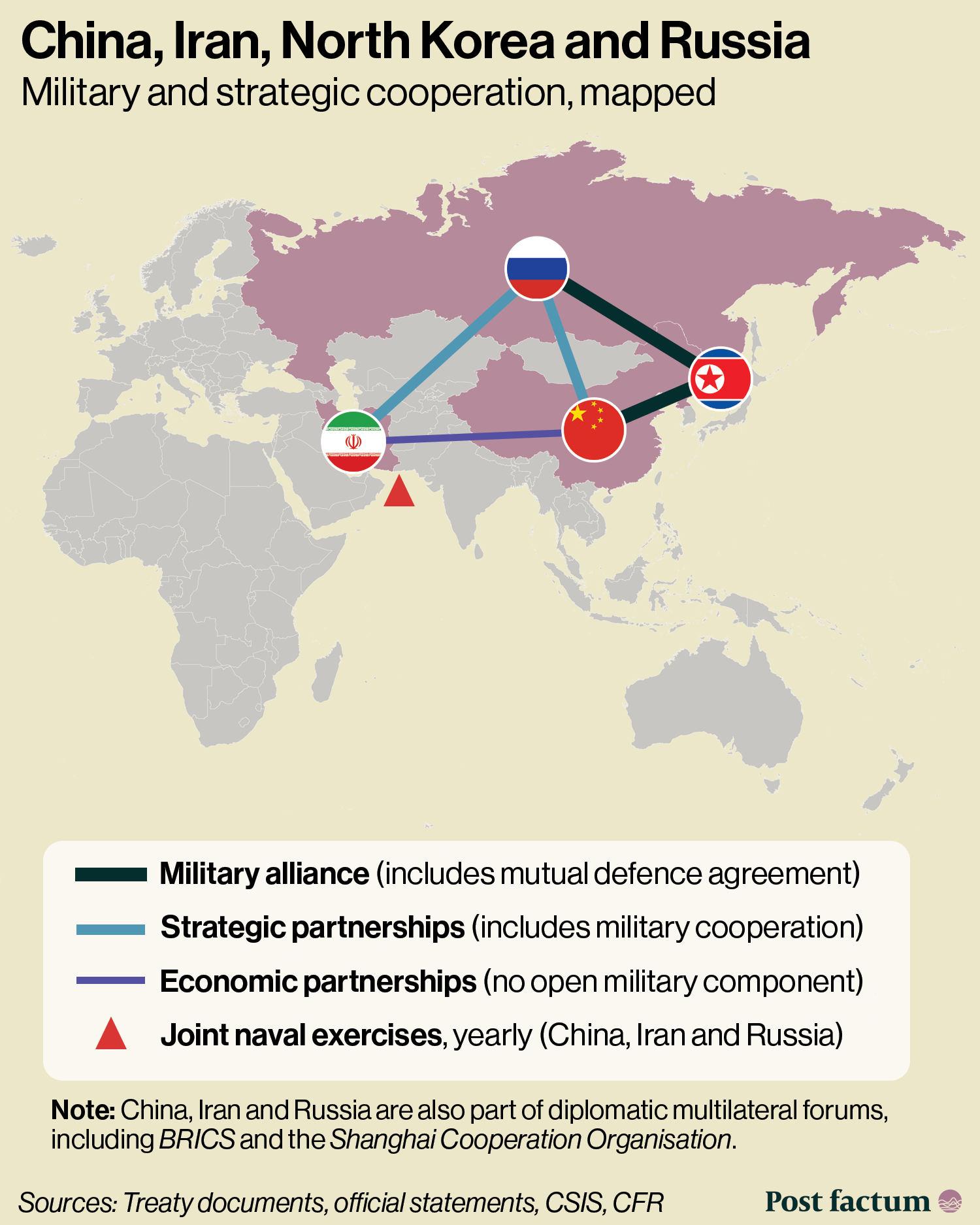
China, Iran, North Korea and Russia are often discussed as an informal group of countries most interested in reducing US’s global influence.
In reality, there is no formal agreement that brings these 4 together.
However, they are connected by a number of two-way (bilateral) deals.
Russia and North Korea: a full military alliance. North Korea sent around 12,000 soldiers to fight for Russia against Ukraine.
Russia and Iran: military cooperation without a defence pact. Iran has shared the Shahed kamikaze drone technology, while Russia provides intelligence and technical support against the US.
China and North Korea: a long-standing mutual defence pact and military cooperation.
China and Iran: a broad economic partnership. It does not formally include military cooperation.
Joint naval exercises: China, Iran and Russia take part in yearly naval exercises in Iranian waters.
BRICS: China, Iran and Russia take part in the diplomatic forum for multipolarity, but it has little direct effect on geopolitics.
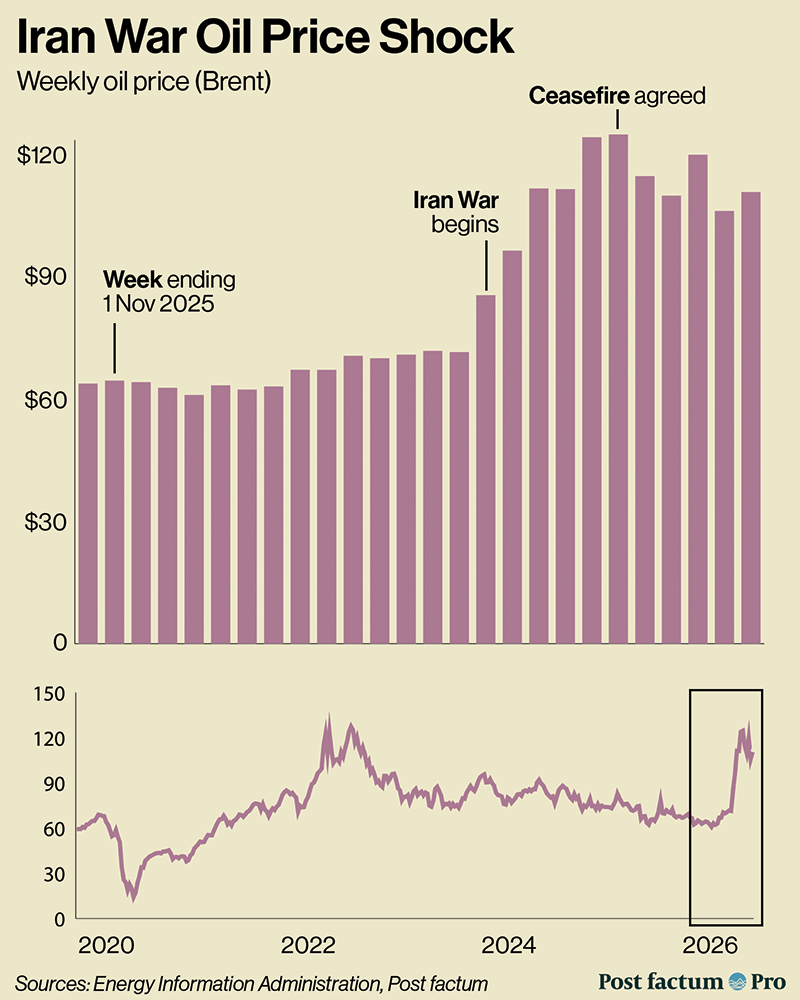
Global tensions escalated again as US and Iran entered open war on 28 February 2026.
We analyse its geopolitical effects so far in our latest Post factum Pro report.
Thank you for reading!
Join Pf Pro to access the comments below:
This week on Post factum Pro:
Economic Effects and Military Results
Save 20% on your first month (or year)
with the code WELCOME.